
Reviewed · MAURITIUS
Rodrigues Island – ORIGINE Guided Tour
Rodrigues is not the sort of island you understand from a beach chair. This seven-hour guided tour takes you from Port Mathurin’s colonial past to military viewpoints, mountain ridges, a traditional home, a cathedral, caves, and old coral workings. It gives you the island’s story in one well-packed day.
I like the small maximum group of 12, which should make questions and conversation easier, and I like that lunch, water, transport, and admission are included. The main thing to consider is the pace: ten listed stops in seven hours means this is a broad introduction, not a slow visit to each place.
Key details before you book
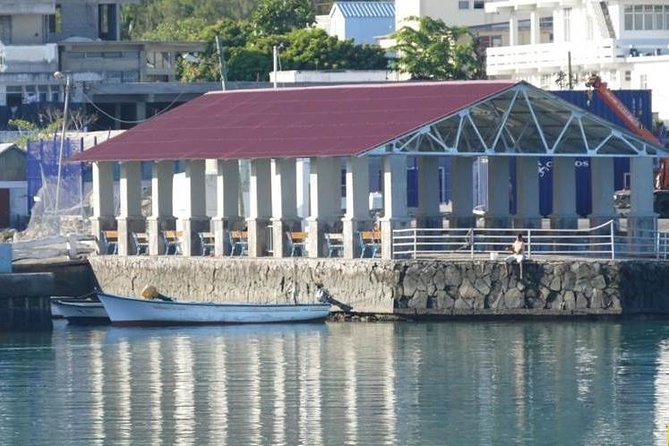
- Port Mathurin opens the story: You begin with the island’s past and present in its main town, then move into military history at Pointe Canon.
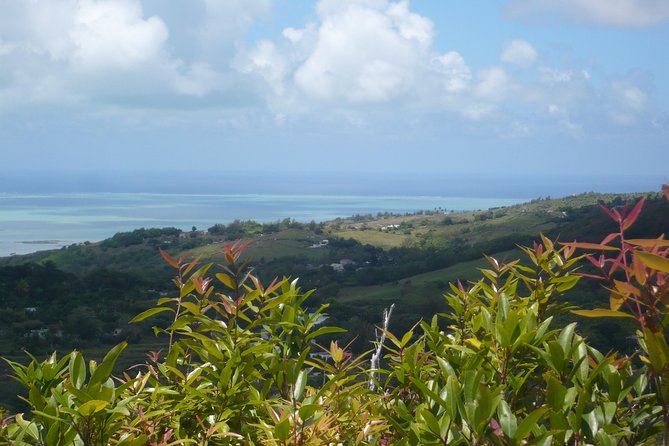
- Mont Limon gives you a wide view: The tour reaches one of Rodrigues’ high points for a 240-degree panorama.
- Culture is part of the day: A traditional house and St. Gabriel Cathedral add daily life, faith, and local customs to the geology and scenery.
- Caverne Patate requires some effort: You move between stalactites and stalagmites, so a moderate fitness level is required.
- Lunch is included: You receive a two-course meal, while drinks cost extra.
- Transport keeps the day simple: Hotel pickup and drop-off, bottled water, activities, and a professional guide are included.
A full day that explains Rodrigues from several angles
The smart idea here is variety. Many island tours give you views and a few photographs. This one tries to explain how Rodrigues was formed, settled, defended, worshipped in, and lived in.
You will hear live commentary during the day, with the guide covering geology, geography, military history, culture, religion, and local life. That mix matters because Rodrigues can look simple at first glance: a small island, a few towns, hills, and a lagoon. The details are what make it memorable.
The schedule starts at 8:30 a.m. and lasts roughly seven hours. Hotel pickup and drop-off are included, but your exact pickup time and location should be confirmed when you book. The tour requires at least two people and accepts no more than 12, a useful middle ground between a private outing and a large coach trip.
A few more things to do in Mauritius worth a look
- Mauritius: Le Morne Mountain Guided Sunrise Hike and Climb
★ 4.9 · 839 reviews - Mauritius: Guided Kayak Tour on Tamarin River
★ 4.7 · 268 reviews - Tamarin: Guided Kayak Tour with Dolphins
★ 4.5 · 190 reviews
Port Mathurin connects the colonial past with today
The first stop is a tour of Port Mathurin, presented as both a historic settlement and a modern town. This gives you a useful beginning because the guide can place the rest of the day in context.
Expect the focus to move from the colonial era to the present. You are not only looking at buildings or streets. You are learning how the main town fits into Rodrigues’ wider story.
This opening section should suit you if you want more than scenic stops. It is also a good place to ask questions about the island before the tour moves into its military, religious, and natural-history subjects.
The limitation is time. Port Mathurin is only one part of a packed route, so do not expect a long, unstructured town walk with plenty of shopping or personal exploration. The value comes from the guide’s explanation and the connection between this first stop and everything that follows.
Pointe Canon adds a military chapter
At Pointe Canon, the subject changes to the military history of Rodrigues. This is a practical contrast with Port Mathurin. Instead of only looking at settlement and town life, you get a sense of why the island’s position mattered.
The stop also adds another viewpoint to the day. The tour is not built around a single grand monument. It uses several places to show how the island has been shaped by location, defense, faith, and trade.
If military history is a special interest, you will want to listen closely and ask the guide for details. If it is not, the stop still helps explain why certain coastal and elevated points had importance beyond their scenery.
Mont Limon offers the broadest view
The tour then climbs to Mont Limon, described as the roof of Rodrigues. From here, you get a 240-degree panoramic view. This is likely to be one of the day’s best photography stops, especially if you want to see the island as a whole rather than as a series of separate locations.
High viewpoints are most useful when a guide explains what you are seeing. Hills, coast, settlements, and open water become easier to understand when you can connect them to the island’s geology and geography.
Bring a camera, but do not count on perfect conditions. The experience requires good weather, and the tour can be rescheduled or refunded if poor weather forces cancellation. Even on a clear day, allow time to look rather than treating the stop as a quick photo break.
Same stretch of island, a different sort of day:
- Mauritius: Ile Aux Cerfs Catamaran Trip w/ Lunch & Transfer
★ 4.3 · 1,922 reviews - Mauritius: Full-Day Catamaran Cruise to the Northern Isles
★ 4.7 · 1,798 reviews - Île aux Bénitiers: Snorkeling w/Dolphins Boat Tour & Lunch
★ 4.0 · 1,635 reviews - Mauritius: Private Southwest Chamarel Highlights Tour
★ 4.8 · 1,427 reviews
A traditional house shows daily life at a human scale
The visit to a traditional house is one of the more personal parts of the route. Mountains and caves explain the island physically. A home helps explain how people lived.
The provided details do not specify the house’s exact age, furnishings, or family history, so you should think of this as a guided cultural stop rather than a guaranteed museum visit. The guide’s commentary is important here. Ask about construction, household life, and how the home connects to Rodrigues’ past.
This is also where the tour can feel less like sightseeing and more like a conversation about local identity. You will not simply pass through a series of impressive viewpoints. You will see an example of ordinary life and place it beside the island’s churches, quarries, and military sites.
St. Gabriel Cathedral brings faith into the itinerary
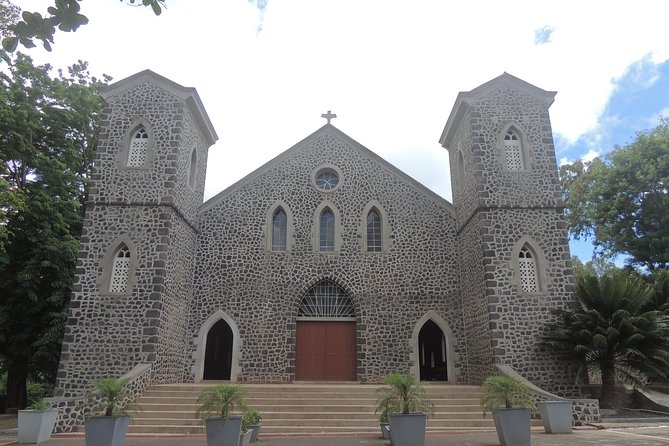
The cathedral visit is intended to help you understand the history of St. Gabriel Cathedral, not merely step inside for a quick look. Religious buildings often carry several layers of local history, and this stop adds a cultural and spiritual side to the day.
The exact length of the visit is not given, so keep your expectations sensible. It is part of a larger route rather than a dedicated architectural tour. Still, it gives the guide a chance to explain how faith and community life fit into Rodrigues.
Dress and behave respectfully at the cathedral. The tour information does not state a formal dress code, but a place of worship deserves the same courtesy you would give one at home.
Pajérôme water brings in legend and local imagination
The itinerary next passes through Pajérôme water, where you discover its legend. This is a welcome change of tone. After the factual subjects of town history, military history, and geology, the route makes room for stories passed through local culture.
The information supplied does not explain the legend itself, which is a good reason to let the guide tell it rather than searching for a short version in advance. Local stories often make a place easier to remember than a list of dates.
This stop may appeal most if you enjoy the way history and storytelling overlap. It also helps keep the seven-hour day from becoming too academic.
Lunch gives the schedule a needed pause
A two-course lunch is included, along with bottled water. Drinks are not included, so budget for anything beyond the supplied water and meal.
The lunch is described as a good, hearty meal, but the exact menu is not provided. A vegetarian option is available if requested at booking, and you should provide any other dietary requirements at that stage. Do not wait until the morning of the tour if you need a special meal.
Lunch is more than a price saving. With several stops still ahead, it gives you a proper pause and a chance to reset before the cave and geology sections. It also means you do not have to spend part of the morning trying to find food while keeping up with the group.
Caverne Patate is the most physical stop
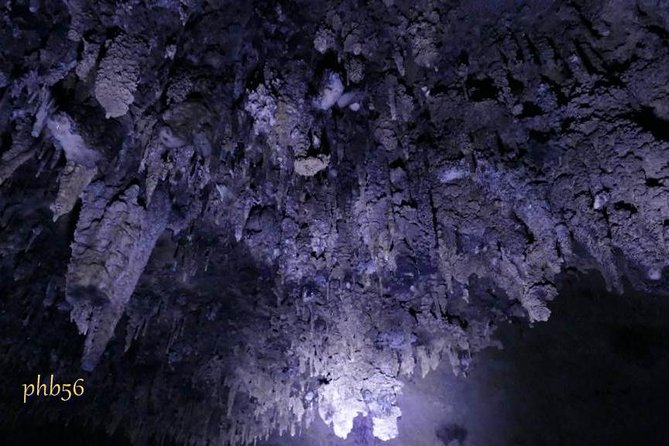
At Caverne Patate, you move step by step between stalactites and stalagmites. This is the clearest reason the tour asks for a moderate level of physical fitness.
The cave section should be approached as an active visit, not a simple walk from a vehicle to a viewpoint. The supplied information does not give the route length, surface conditions, or any equipment details, so ask the operator if you have concerns about balance, walking, or confined spaces.
This is also the stop where footwear matters. Wear comfortable shoes suitable for uneven ground. The tour is not wheelchair accessible, and the cave is likely to be the most important reason why. Anyone with mobility limits should check directly before paying.
Caverne Patate adds texture to the day. You have already heard about the island’s formation from high ground. Inside the cave, you see a different expression of that natural story, with mineral shapes formed over time.
Coral quarries and calcarenite fields explain the island’s materials
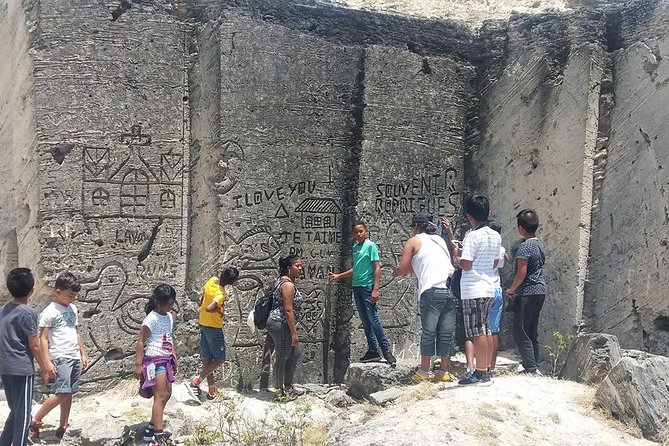
The route then turns to a coral quarry and a field of calcarenites. These stops are especially useful because they connect geology to human use.
Calcarenite is a sedimentary material made largely from sand-sized carbonate grains. You do not need a geology degree to enjoy the stop, but the guide’s explanation can help you understand why these formations matter and how coral material became part of the island’s physical story.
The quarry also gives the day a working, practical edge. It is not only about scenery. You are looking at material shaped by natural processes and then used by people.
Because the itinerary includes both the cave and the quarry, you get two different ways to think about the island’s rock: formations created underground and stone exposed or worked above ground. That is a strong feature for anyone who likes natural history explained in plain language.
Mont Pistache closes the geology lesson
The final listed stop is Mont Pistache and its stratum. Here, the focus returns to layers in the earth and the island’s geological structure.
By this point, the earlier panoramic view, cave visit, quarry, and calcarenite field should fit together. The tour’s geology is not delivered as one long lecture. It is spread across places you can see directly.
The tradeoff is that the final stop may come after a long day of walking, driving, listening, and taking photographs. If you prefer a relaxed schedule with long breaks, this route may feel full. If you want a first-day orientation to Rodrigues, the range of subjects is its greatest strength.
What the $80.87 price includes
At $80.87 per person, the price is easiest to judge as a package rather than as a ticket to one attraction. It includes hotel pickup and drop-off, a professional guide, live commentary, bottled water, a two-course lunch, all activities, and admission tickets.
That matters because transport, food, and entry fees can quickly turn a low advertised tour price into a higher final cost. Here, the main extras are drinks and anything you choose to buy personally.
The small group also improves the value. With a maximum of 12 people, you should have a better chance of hearing the guide and asking questions than on a large bus. It is not private guiding, but it is small enough to feel more personal.
The price is less attractive if you want only a scenic drive or a quiet day. You are paying for breadth, interpretation, meals, and transport. I would choose it when I have limited time and want a useful introduction to Rodrigues rather than a single focused activity.
Who will enjoy this Rodrigues tour most
I would recommend it to you if you like history and geology in equal measure. It suits people who want context at viewpoints, cultural stops, a religious site, and natural formations.
It is also a good fit for a first visit. The route gives you several ways to understand the island, and the guide’s broad commentary can help you decide what deserves more time later.
Families may appreciate the included lunch and hotel transport, but the child rate applies only when a child shares with two paying adults. The cave and the full day may be tiring for young children, and the moderate fitness requirement deserves attention.
You should think twice if you need wheelchair access, dislike uneven walking, or want lots of free time. This is a structured day with many stops. It also requires at least two people to make a booking.
The tour has a strong record of praise for its guide service, especially the guide’s kindness, helpfulness, and command of Rodrigues’ history and culture. That is important here because the experience depends heavily on explanation. The places are varied, but the guide is what ties them together.
Practical booking advice and cancellation terms
Book early if your schedule is fixed. The activity is booked, on average, 123 days ahead, which suggests that planning well in advance is sensible, especially if you want a particular date.
You receive confirmation at booking unless you reserve within seven days of the experience. In that case, confirmation comes within 48 hours and depends on availability.
Free cancellation is available until 24 hours before the start time for a full refund. Cancellations or changes made less than 24 hours before the start time are not accepted for a refund. The cutoff uses local time.
The experience depends on good weather. If weather causes cancellation, you are offered another date or a full refund.
Should you book the Origine tour?
Book this tour if you want one well-filled day that explains Rodrigues through history, culture, geology, and scenery. The included lunch and hotel transport simplify the day, while the 12-person limit keeps the group from becoming unwieldy.
I would not book it for a slow beach day, a private custom route, or a fully accessible outing. The schedule is active, the cave requires physical ability, and the number of stops leaves limited time for lingering.
For most visitors with only a short stay, though, this is a sensible way to get your bearings. You leave with more than photographs: you see how the island’s towns, stories, faith, rocks, and views fit together.
FAQ
What time does the tour start?
The tour starts at 8:30 a.m.
How long does the experience last?
The experience lasts approximately seven hours.
Is hotel pickup and drop-off included?
Yes. Hotel pickup and drop-off are included.
What is included with lunch?
A two-course lunch is included. Bottled water is also provided, but drinks are not included.
Is a vegetarian meal available?
Yes. A vegetarian option is available, but you need to request it when booking. You should also provide details of any other dietary requirements at that time.
How many people can join the tour?
The tour requires a minimum of two people per booking and has a maximum group size of 12 travelers.
Is the tour wheelchair accessible?
No. The tour is not wheelchair accessible and requires a moderate level of physical fitness.
Just added in Mauritius
- Mauritius: Watersport Adventure Day with Lunch and Pickup★ 3.9 · 3 reviews
- Whale & Dolphins Swimming – Private Speedboat Exclusive Tour★ 4.2 · 3 reviews
- Black River: Guided Hike in the Black River Gorges Valley★ 4.0 · 6 reviews
- Walking under the sea in Mauritius with transfer★ 3.4 · 7 reviews
- Mauritius: Private Full Day Tour with Entry Tickets & Lunch★ 4.4 · 12 reviews
- Vallé Advenature Park, Discovery Quad single 1hr★ 4.7 · 12 reviews
- Tea Route: Lake, Forest, Tea Plantation & 3 Course Lunch★ 3.6 · 7 reviews
- The beautiful East of Mauritius:incl Blue-Bay Marine Park, Crocodile park &Lunch★ 4.0 · 7 reviews